
Tour Waivers During Busy Days: What Breaks and How to Fix It
Christian Rafols
Why Waivers Become a Problem During Busy Tour Days
On a slow day, waiver handling feels simple.
A few guests arrive, forms are handed out, signatures are collected, and everything moves along without much friction.
But busy days change everything.
Multiple groups arrive at once. Some guests are early, others are late. Staff are managing logistics, answering questions, coordinating schedules, and trying to keep everything on time.
In this environment, even small inefficiencies become major problems.
Waivers, which are often treated as a simple administrative task, quickly become one of the biggest operational bottlenecks.
What should take seconds turns into delays, confusion, and frustration.
For many tour operators, this is the moment where they realize the waiver process is not just a legal requirement. It is a critical part of the customer experience.
As operations scale, relying on a digital waiver system helps eliminate bottlenecks and keeps the check-in process fast, organized, and consistent even during peak hours.
How Most Tour Operators Handle Waivers Today
Most operators rely on one of three approaches.
Paper Waivers at Check-In
This is the most common method.
Guests arrive, are handed a clipboard, and asked to fill out forms manually. Staff then collect and organize the paperwork.
While this works in low-volume situations, it breaks down quickly under pressure.
These breakdowns highlight the real advantages of electronic waivers over paper, especially when speed, accuracy, and organization become critical during busy operations.
Pre-Sent PDFs or Email Attachments
Some operators try to improve the process by sending waivers in advance.
In theory, this reduces check-in time.
In reality, many guests:
- forget to complete the form
- cannot access it easily on mobile
- arrive unsure if they did it correctly
This creates inconsistency and still requires manual verification on-site.
Verbal Confirmation Without Proper Documentation
In some cases, operators rely on verbal confirmation or incomplete documentation to speed things up.
This introduces risk.
There is no reliable record, no centralized tracking, and no way to verify completion in real time.
Many operators face recurring challenges covered in common online waiver questions from tour companies, particularly around compliance, usability, and guest completion rates.
Where the Waiver Process Breaks
Busy days expose the weaknesses in these systems.
Bottlenecks at Check-In
Guests filling out forms on arrival create immediate delays. Lines form. Staff rush. Guests become impatient. The first impression of the experience becomes one of waiting and confusion instead of excitement.
Incomplete or Incorrect Information
Handwritten forms often lead to:
- missing signatures
- unreadable details
- incomplete fields
This creates compliance issues and forces staff to double-check everything manually.
Lost or Misplaced Waivers
Paper forms must be collected, stored, and organized. During busy operations, this is not always done perfectly. Forms get misplaced. Records become difficult to find. This creates both operational and legal risks.
Staff Overload During Peak Hours
Instead of focusing on guests, staff are managing paperwork.
They are:
- answering questions about forms
- checking completion
- organizing documents
This reduces the quality of the experience and increases stress for the team.
No Real-Time Visibility
Operators often cannot quickly answer simple questions:
- Who has signed?
- Who still needs to complete a waiver?
- Which group is ready to go?
Without real-time visibility, everything becomes reactive.
Where the Waiver Process Breaks
Busy days expose the weaknesses in these systems.
Bottlenecks at Check-In
Guests filling out forms on arrival create immediate delays.
Lines form. Staff rush. Guests become impatient.
The first impression of the experience becomes one of waiting and confusion instead of excitement.
Incomplete or Incorrect Information
Handwritten forms often lead to:
- missing signatures
- unreadable details
- incomplete fields
This creates compliance issues and forces staff to double-check everything manually.
Lost or Misplaced Waivers
Paper forms must be collected, stored, and organized.
During busy operations, this is not always done perfectly.
Forms get misplaced. Records become difficult to find.
This creates both operational and legal risks.
Staff Overload During Peak Hours
Instead of focusing on guests, staff are managing paperwork.
They are:
- answering questions about forms
- checking completion
- organizing documents
This reduces the quality of the experience and increases stress for the team.
No Real-Time Visibility
Operators often cannot quickly answer simple questions:
- Who has signed?
- Who still needs to complete a waiver?
- Which group is ready to go?
Without real-time visibility, everything becomes reactive.
The Hidden Cost of a Broken Waiver Process
The impact of these issues goes beyond inconvenience. A broken waiver process affects:
Operational Efficiency
Delays slow down the entire schedule, affecting multiple tours throughout the day.
Customer Experience
Guests start their experience with friction instead of confidence.
Staff Performance
Teams become overwhelmed managing tasks that should be automated.
Risk and Compliance
Missing or incomplete waivers create unnecessary exposure.
Revenue and Throughput
Longer check-in times reduce the number of tours that can be handled efficiently.
Waivers are not just paperwork. They directly influence how smoothly your business operates.
What a Smooth Waiver Process Looks Like
A well-designed waiver process removes friction entirely.
Automatically Linked to Bookings
There is no need to match forms manually. Everything is connected.
How Digital Waivers Fix the Problem
This is where solutions like WaiverSign come in.
Digital waivers transform the process from manual and reactive to structured and efficient.
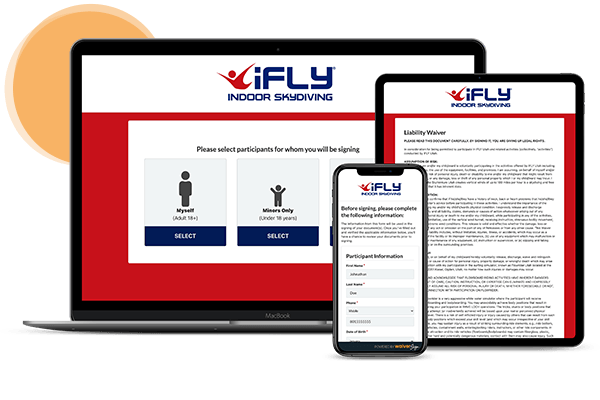
Instead of relying on paper or inconsistent workflows, guests can complete waivers before arrival or on-site using any device.
Faster Check-In Experience
Guests arrive ready.
There are no lines, no clipboards, and no delays caused by paperwork.
Improved Accuracy and Compliance
Digital forms ensure all required fields are completed correctly.
This reduces errors and improves documentation quality.
Better Organization and Accessibility
All waivers are stored in one place.
Staff can access records instantly when needed.
Stronger Customer Experience
The process feels modern, professional, and seamless.
Guests feel more confident and prepared.
Paper vs Digital Waivers: What Actually Changes
| Paper | Digital | |
|---|---|---|
| Speed | Slow, manual, dependent on staff | Fast, automated, guest-driven |
| Accuracy | Prone to errors and missing information | Structured and validated |
| Guest Experience | Confusing and time-consuming | Simple and convenient |
| Staff Efficiency | High workload | Minimal intervention |
| Risk Management | Difficult to track and store | Organized and accessible |
How Waivers Fit Into the Customer Intake Process
Waivers are not an isolated step.
They are part of a larger system that includes:
- booking confirmation
- pre-arrival communication
- check-in flow
- customer data collection
When the waiver process is inefficient, it affects the entire intake experience.
A smooth intake process builds trust, reduces friction, and improves overall operations.
What This Means for Your Tour Business
Tour operators often focus heavily on marketing and bookings.
But operational details like waivers play a critical role in how those bookings turn into real experiences.
A slow or disorganized waiver process creates friction before the tour even begins.
A streamlined process improves efficiency, builds trust, and supports better customer experiences.
WaiverSign helps eliminate that friction by creating a faster, cleaner, and more reliable intake process that supports both compliance and customer experience.
Frequently Asked Questions
Are digital waivers legally valid?
Yes. Digital waivers are widely accepted when properly structured and stored. They provide clear records and timestamps for each agreement.
Can guests sign waivers on their phones?
Yes. Digital waiver systems are designed to work on mobile devices, allowing guests to complete forms anywhere.
What happens if a guest forgets to sign?
Staff can quickly identify incomplete waivers and prompt guests to complete them on-site using a mobile device.
Are digital waivers secure?
Yes. Digital systems store waivers securely and allow easy access while maintaining organization and control.
Can waivers be linked to bookings automatically?
Yes. Modern systems connect waivers directly to bookings, eliminating manual matching and reducing errors.
Do digital waivers improve customer experience?
Yes. They reduce wait times, simplify the process, and create a more professional and seamless onboarding experience.
How do waivers affect check-in speed?
Waivers are one of the main factors influencing check-in time. A streamlined process significantly reduces delays and improves flow.

See If WaiverSign Works For You
Don't wait to make the next step in streamlining your business.